HVAC · Fischer, TX
Technicians arrive with tools sized for residential ductwork and follow a set sequence that protects the home while addressing the areas that need attention. The focus stays on removing accumulated material rather than adding treatments.
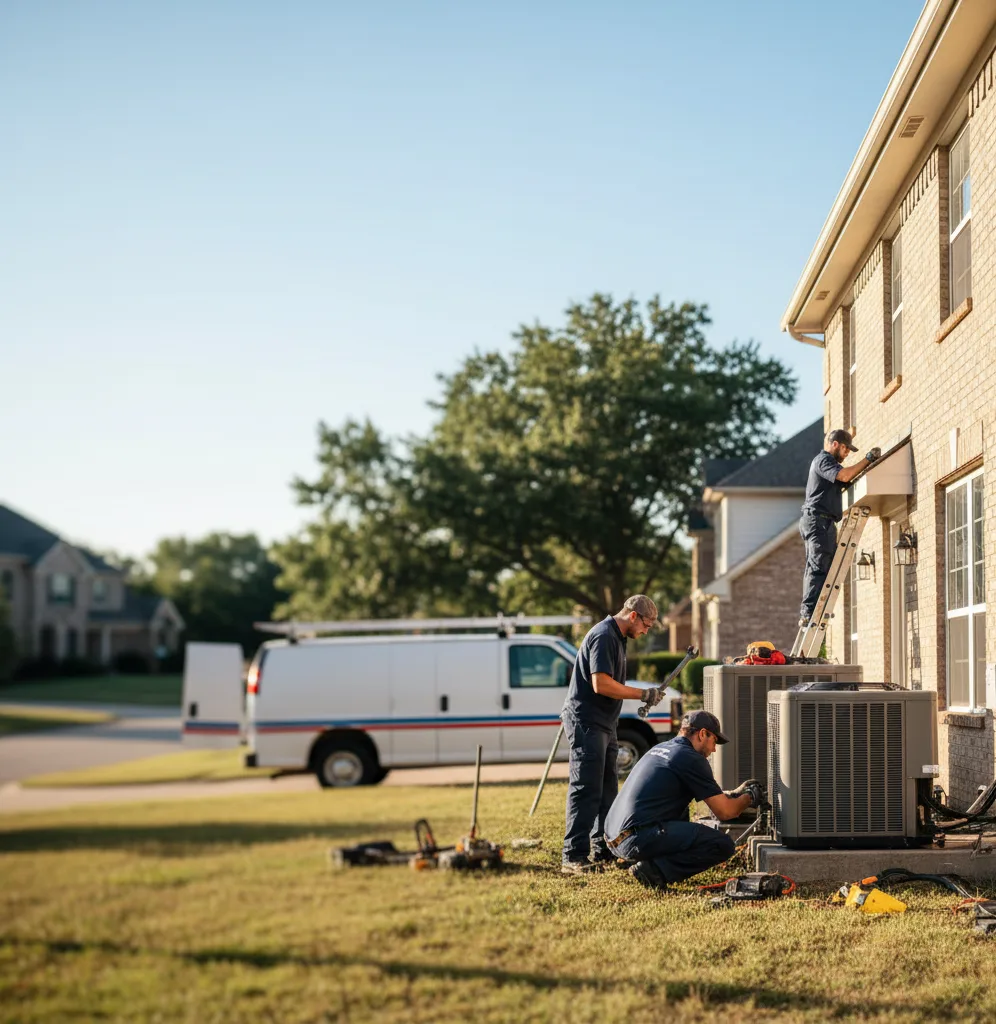
Dust that settles quickly on surfaces, uneven temperatures between rooms, and a persistent musty smell when the system runs often point to material collected inside the ductwork. A technician looks for these indicators during the initial walkthrough and checks access points to see how far the buildup extends. In many homes the return side collects more debris because it pulls air from living spaces, while supply runs can trap construction residue or pet dander over time. Removing that material requires reaching each section without damaging seams or insulation. The process also includes the blower compartment and any accessible registers so the entire path gets covered.
Technicians first isolate the system and protect flooring and furniture near access points. They then use brushes sized for the duct diameter to loosen deposits while a vacuum collects the debris at the opposite end. Filters are replaced and coils are wiped if they show visible film. The work finishes by restoring all connections and running the system briefly to confirm air moves freely through the cleaned sections. Homeowners can note whether vents that previously felt weak now deliver steady airflow after HVAC maintenance.
Homes depend on steady airflow through duct systems to support indoor comfort. The ground beneath a building affects long-term stability of foundations and attached mechanical systems. Fischer sits on expansive clay.
Weather patterns influence how often heating and cooling equipment runs. The area sees hot summers and cool winters. Local conditions often include expansive clay that shifts with the seasons and very hard water.
Duct cleaning removes accumulated debris that can restrict airflow. Service visits keep systems operating smoothly under whatever pressures the surroundings create.
FAQ

Short cycling often comes from an oversized system, a dirty filter that restricts airflow, or a failing thermostat that misreads room temperature. The technician checks the temperature split across the coils and reviews the recent run times logged by the control board. Once the cause is identified the repair focuses on restoring steady operation rather than masking the symptom.
The price depends on the location of the leak, whether access requires removing panels or moving ductwork, and how much refrigerant must be recovered and replaced. Small leaks in accessible lines are often less expensive than those inside the coil itself. A full diagnosis is needed before an accurate range can be given.
Most filters slide out from a marked compartment near the indoor unit and can be swapped without tools. If the system still runs poorly after a new filter is installed, the next step is a check of the blower wheel and evaporator coil for deeper buildup. A service call then confirms whether the issue is limited to airflow or something further in the refrigeration circuit.
HVAC Repair across Fischer, TX. Call (888) 206-0387.
Call (888) 206-0387